


Dating Without a License - Why You Need a Driver’s Manual for Your Love Life
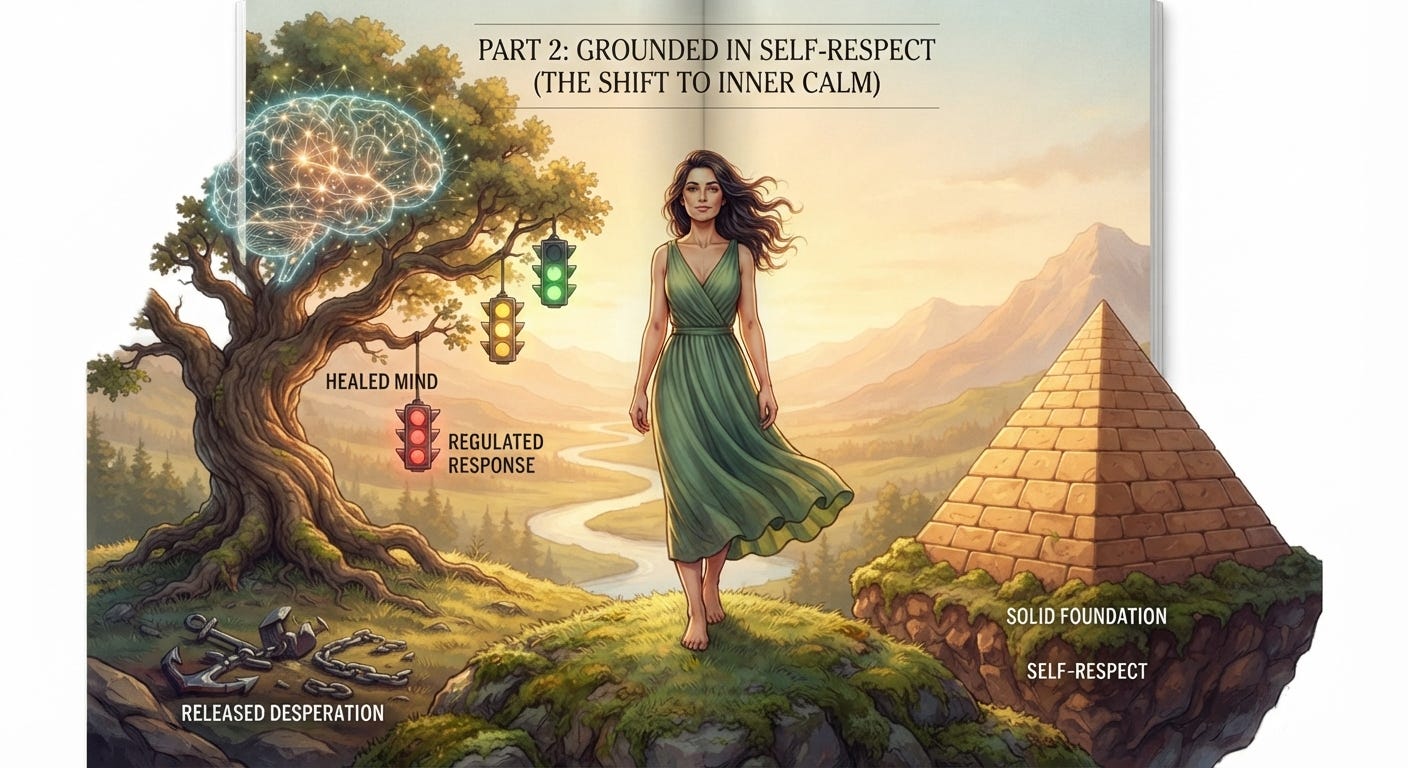
In Part 1, we looked at how reality TV shows highlight our modern obsession with “chemistry”—and how we’ve completely inverted the pyramid of needs by putting physical spark above emotional safety.
Now, let’s talk about how to actually fix it in real life.
If dating apps, social media, and speed-dating shows are the vehicle, then most of us are being handed the keys to a high-powered sports car without a single driving lesson. We slam on the gas, ignore the hazard signs, and then act surprised when we end up in a total pile-up.
If you want to stop crashing, you have to learn how to drive before you get back on the road.
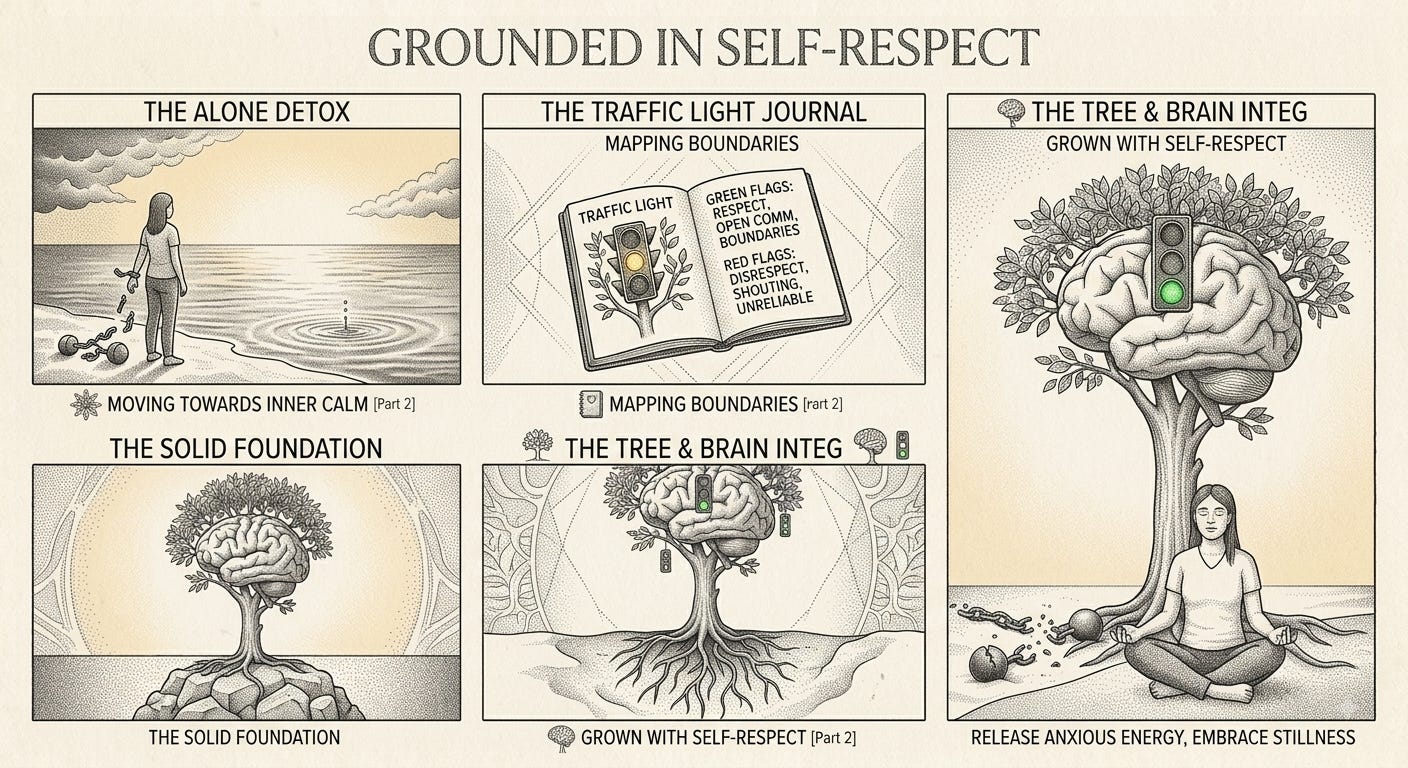
The Traffic Light System: Driving Lessons for Your Heart
When most people go on dates, they spend all their energy looking out for Red flags. While spotting danger is important, constantly staring at the brakes means you never actually learn where you’re trying to go.
If you want to build emotional maturity, you need to map out your dashboard using three simple colors:
🟢 GREEN (The True Foundations)
True Greens are about character, safety, and emotional intelligence:
How do they speak to waiters, service staff, or their family?
Do they listen when you talk, or are they just waiting for their turn to speak?
Do they respect your boundaries when you say “no” or “not tonight”?
Do they stay calm and communicative when there’s a slight disagreement?
🟠 AMBER (The Pauses for Reflection)
Amber flags aren’t dealbreakers yet, but they require you to slow down:
Different lifestyle habits, social tendencies, or views on money.
Different ways of handling stress or conflict.
Things that make you feel slightly unsure or hesitant.
Amber means: Don’t rush in, don’t ignore it, but don’t panic either. Observe and talk about it.
🔴 RED (The Immediate U-Turn)
Non-negotiable boundaries that directly compromise your respect or safety:
Gaslighting, lying, or shifting blame when caught in a contradiction.
Using intimacy or affection to dodge serious conversations.
Disrespectful language, shouting, or boundary-pushing.
The Power of the Relationship Notebook
One of the best things I ever did during my nearly twenty years of searching for my person was keeping a dedicated journal—a specific leather notebook I bought in Italy a decade ago that was strictly for my relationship journey.
Looking back at those entries now is heartbreakingly clear. Page after page revealed that I knew, deep down, a person wasn’t right for me. Yet I carried on speaking to them simply because I wanted the idea of someone, or because I couldn’t bear the thought of being alone.
I didn’t write long essays every day. Often, it was just bullet points after a date or a dynamic ended:
What did I feel in my gut during that conversation?
Did I compromise on a boundary just to be liked?
What did I actually enjoy about their character (Green)?
What made me feel unsafe or uncomfortable (Red)?
“When you write things down, you stop relying on selective memory. You start noticing your own patterns.”
When you write things down, you stop relying on selective memory. You start noticing your own patterns. You realize whether you’re acting out of emotional insecurity, or if you’re repeatedly choosing partners who switch off the moment real conversation starts.
PERSPECTIVE: THE ALONE DETOX
Finding peace with myself and not being afraid to be alone was one of the hardest things I’ve ever done in my life. It is a genuine detox. When you stop chasing connections, it feels like going through withdrawal—it’s lonely, it’s uncomfortable, and sitting in a restaurant by yourself while seeing families and couples around you can feel overwhelming.
For a long time, I mistook my search for a relationship as just wanting a partner, but looking back, I was searching for emotional support, connection, and a safe space to just talk, laugh, and be myself—things I didn’t get growing up in an environment focused purely on performance and duty without emotional warmth. I was searching externally for what I hadn’t yet built internally.
Stepping away for two years to be on my own wasn’t easy, but it was the best thing I ever did. It forced me to unlearn the habit of settling for breadcrumbs or letting people waste years of my life just so I wouldn’t be alone. By the time I met my current partner, I wasn’t desperately searching for someone to fill a void—I was already complete on my own. Being comfortable in your own solitude isn’t just a luxury; it’s the ultimate protection against ever settling for less than you deserve again.
Navigating Emotional Differences
A huge part of emotional maturity is understanding that partners often process emotions, stress, and connection differently.
In high-pressure situations, some people default to emotional processing and intense expression, while others get overwhelmed, exhausted, or retreat into avoidance.
When you approach relationships with curiosity and empathy—rather than expecting another person to think, act, and react exactly like you do—you eliminate half the friction right out of the gate. Understanding doesn’t mean accepting disrespect; it means knowing the difference between a fundamental incompatibility and a simple communication gap.
Finding Yourself to Find “The One”
Everyone is running around trying to find “The One,” but almost no one is taking the time to find themselves first.
If you have only ever known one-sided dynamics—at work, at home, or in past relationships—healthy love can almost feel unfamiliar at first. When I met my current partner, the dynamic was the complete opposite of my past. There were no mind games, no anxiety-inducing ambiguity, and no needing to prove my value through a frantic chase born out of insecurity. Instead, there was genuine friendship, clear intent, steady consistency, and mutual respect.
When you get clear on who you are, what your values are, and what safety actually feels like, a massive shift happens:
You stop settling: Bare-minimum attention no longer looks like a romantic fairytale.
Your radar sharpens: You spot real substance almost instantly.
You enjoy your own company: Being single stops feeling like a waiting room and starts feeling like a solid, peaceful home base.
The Ultimate Shift: Peace Over Pressure
At the end of all the dates, notebooks, and reflection, the greatest lesson is this: true love is self-respect.
It is learning your own boundaries, getting strict and stern with what you will and won’t accept, and refusing to compromise your peace for company. True love isn’t an external prize to win or a milestone to check off; it is internal peace, emotional safety, and learning to be completely okay with yourself as you are. Just being.
When you reach that state of internal calm, your natural energy shifts. You release the desperation, your energy relaxes, and you speak with a slower, steady tone; you no longer carry the anxious energy or frantic urgency of needing to be chosen. You become like a tree with deep, unshakable roots—grounded so firmly in who you are that no internal doubt or external issue can shake or move you.
When the right person comes along, they don’t meet an anxious pursuer trying to prove their worth—they meet someone grounded in their own presence. You don’t have to force a healthy connection. When you’ve built peace within yourself, the right person doesn’t feel like a high-stakes test; they simply feel like home.
Ready for 1:1 support?
The Relationship Reset is a private, 90-minute strategy session for anyone navigating modern dating burnout, repeating unhealthy partner patterns, or trying to break free from anxious-avoidant loops. Backed by real-world insight and years of navigating the chaos, you’ll get immediate clarity and an exact personal action blueprint.