


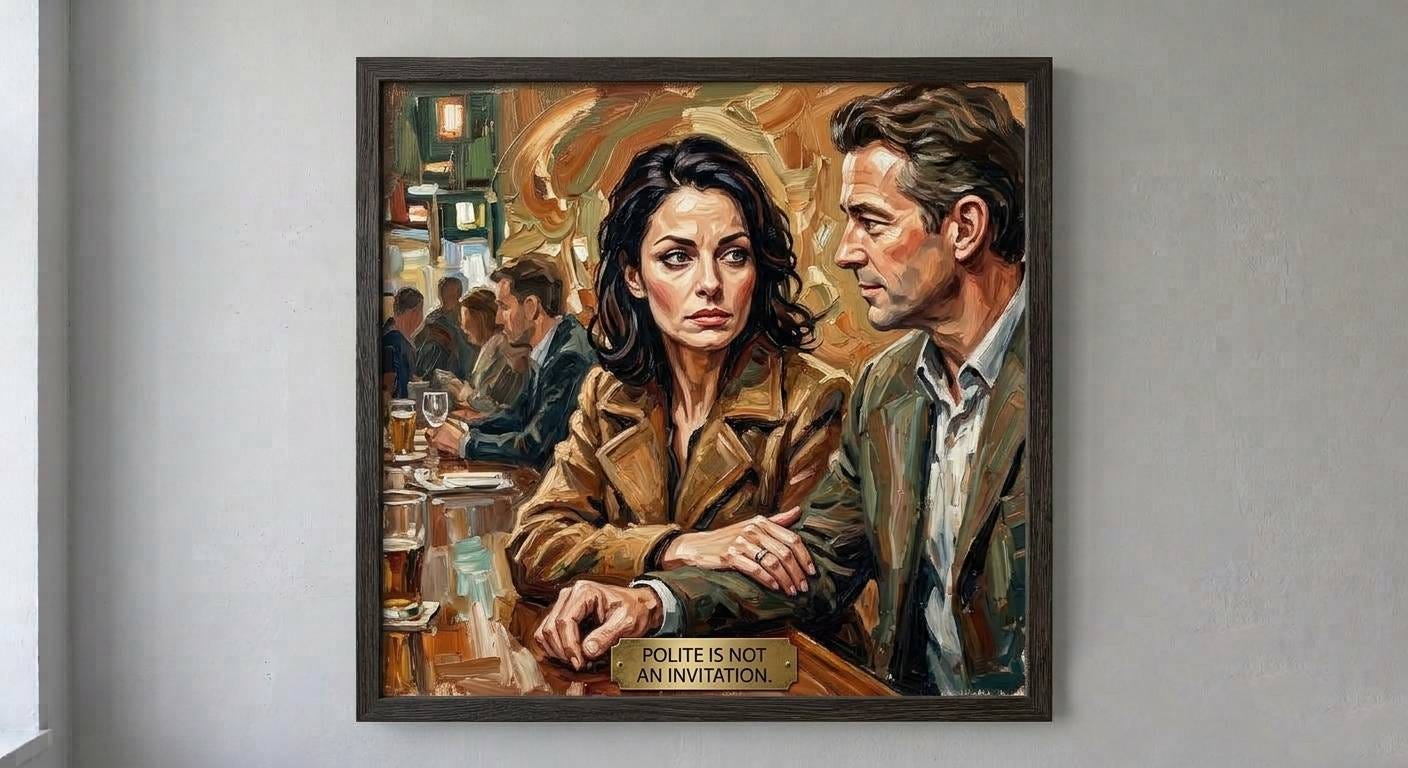
I’ve been unwell, and I hadn’t had a proper day out in ages. I was really looking forward to it. We had a lovely day, walking around and enjoying being out together. By the evening my body was tired, the kind of tired that comes after a long day on my feet when you’re still getting your strength back. With C-PTSD and ADHD, my energy runs out faster than people realise.
We found a restaurant for dinner. There was a queue, and when we reached the front we were given bar seats. I sat next to a man I didn’t know, and my husband had a seat a little further along. It felt awkward and uncomfortable from the start, but we were hungry and it had been a long day, so we stayed.
My husband and I look very different, so people don’t see us as a couple. With him a seat away, I looked like a woman sitting alone at a bar. I think that is why what happened next happened.
The waiter was friendly, and I was friendly back. I said, “Oh, that looks great,” the sort of thing anyone says. I have a ring on my finger. I’m a married woman and I was simply being polite. But he began asking me personal questions about my background, as if he knew me or had the right to. In my faith it isn’t appropriate to ask a married woman those things, and in British culture we don’t ask them either. My heritage is personal. I’m a professional, and I don’t discuss my private life with men I don’t know.
I don’t know what he meant by it. Maybe he thought he was making conversation. But he shouldn’t have assumed anything about me from how I look, and if he had known I was married, I don’t think he would have asked at all. Being polite and observing my faith’s manners is not an invitation to pry.
Then came the bill, and the pressure over the service charge. This is where my C-PTSD and ADHD took over. When I feel cornered, my nervous system goes into defence and the words spill out before I can stop them. I explained myself. I defended myself. I mentioned my work and my education, trying to make them back off. Afterwards I felt drained and exposed, and I wished I had stayed quiet.
Where my husband fits in
My husband didn’t say anything during all this, and I don’t hold that against him. He respects me. He lets me speak for myself and handle things, and he doesn’t control me. But the other side of that is that he won’t step in unless I ask, and in the moment I forget that I can. Under pressure my brain only has room for the fight. So maybe the answer isn’t to handle everything myself. Maybe I need to ask for help.
What I learned
When my ADHD and C-PTSD kick in and I feel the urge to speak, the best thing I can do is stay silent.
Being polite is not an invitation to be questioned.
I don’t owe a stranger my story, my heritage or my reasons.
Explaining myself under pressure costs me a lot of energy and rarely changes anything.
Silence isn’t rude. It is a boundary.
I’m a customer like everyone else, and I’m entitled to a calm, professional experience.
Asking for help is not weakness. It is part of looking after myself, especially when I’m already worn down.
What I’ll do next time
Ask for help before I need it. Because I forget under pressure, I’ll agree a signal with my husband before we sit down. A gentle tap on his arm means he steps in and I step back.
Make it clear we’re together. I’ll sit beside him, not apart, and let my ring be seen.
Say one sentence, then stop. “I’d like to keep things professional, thank you.” Then I let the silence sit.
Know my rights on the bill. A service charge is discretionary. I can simply say, “Could you please remove the optional service charge?” and I don’t need to give a reason.
Choose my seat. If the seating feels uncomfortable, I can ask for somewhere else. I don’t have to stay put just to be polite.
Pace myself. After being unwell, a long day out takes more from me than it used to, so I’ll plan for rest before and after.
To you, the reader
If you’ve ever been caught off guard by personal questions from a stranger, you don’t have to answer. “I’d rather not say” is a complete sentence. You don’t have to justify your boundary, and you don’t have to be harsh to hold it.
If you struggle to find words under pressure, as I do, agree a signal with whoever you’re with beforehand, because asking for help in the moment is hard. And if you’re replaying it afterwards, be kind to yourself. Wishing you had said less doesn’t mean you handled it badly. It means you’re learning what you need.
I stood my ground, I kept myself safe, and I’m resting.