


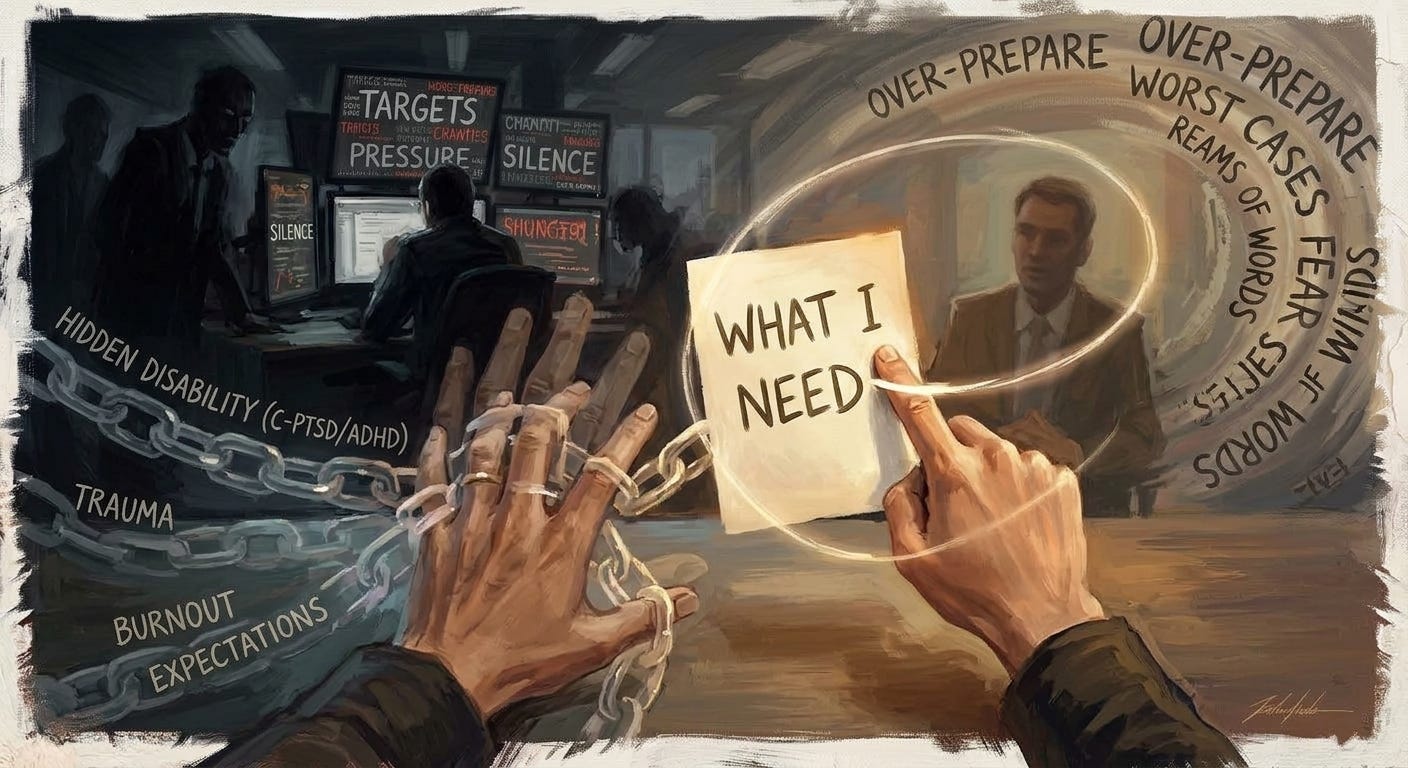
Yesterday I wrote about the knot in my stomach. I was preparing for my first one-to-one with my new manager, and I was overwhelmed, anxious and scared. I’ve had painful experiences in past workplaces, and when you’ve been hurt at work, a meeting with a manager is never just a meeting. Your body remembers what your mind is trying to move past.
I spent Day 12 bracing for a conversation that hadn’t happened yet. I was afraid of being dismissed, afraid of saying too much and afraid of saying too little.
Today I found out what actually happened.
Learning to Give Just Enough
I didn’t know how to summarise today, so I’ll start with the best part. This evening I spent time with my family, and it felt really good.
I could go because I currently have a car I don’t have to worry about. I enjoy driving, and having reliable transport meant I could go somewhere without stressing about how I’d get there. When your health limits how far you can walk, that matters more than it sounds.
My niece was there, and she’s funny and infectious. My partner and I arrived early, sat at the end of the dining table and had a proper laugh and a chat before the rest of the family turned up. Family can be hard for me, so having my person beside me makes a massive difference.
That was the evening. Here’s how the day began.
Returning to work after medical leave: waking up tired
I woke up tired and overslept. I was meant to be in training, but because it’s training, I can make the time up.
Normally I’d have been furious with myself. Today I wasn’t, and I didn’t spend the morning worrying about my new manager watching the clock. I care about doing well, but my health matters more. I’ve just come back from medical leave. I’ve only just received my laptop and equipment. I’m working a small number of days while I find my feet. I also knew it was going to be a heavy day of meetings, with company changes being flagged in advance.
So I gave myself permission to be human. A year ago I wouldn’t have. That’s growth.
My first one-to-one with a new manager
After a day of bracing, the meeting finally arrived. When you’ve had bad experiences with employers, your nervous system doesn’t treat a new manager as a blank slate. It treats them as a possible repeat of everything that went wrong before. I knew that going in, so I tried to name it to myself: this is a new person, and I’m allowed to wait and see.
What I appreciated straight away was that they noticed things about me and made me feel valued. What I was anxious about was whether I’d get the chance to share my concerns.
I reminded myself that a first one-to-one isn’t therapy or counselling. I have CPTSD and ADHD, and when someone is kind to me, my instinct is to pour everything out. This time I did something different. I let my manager set the pace, waited until they asked, and shared only what mattered, without letting it become emotional or overwhelming.
I told them honestly about some of the challenges I’m facing. They said we’d talk it through together before involving occupational health. After a previous workplace where I didn’t get the support I needed, that meant a lot. I didn’t feel fobbed off or handed to another department.
When “that’s just life” misses the point
One thing did annoy me. When I explained a difficult situation, the response was along the lines of “these things happen.” My manager meant well and was empathetic, and I could tell they understood from their own experience. But I’ve heard some version of that line many times, and it wasn’t what I was describing.
I’m a careful, responsible person. What happened to me wasn’t simply bad luck. The impact on me could have been avoided, I’d raised it before, and others on the team had an easier ride than I did. So I said, calmly: I understand that things happen, but I want to be clear that this wasn’t one of those things. It could have been prevented.
I’m proud of that. I didn’t snap, and I didn’t shrink. I’m hoping my manager is putting the pieces together.
The overwhelm that comes afterwards
After the call, I felt overwhelmed. I’d said a lot, there was a lot on my mind, and when I reflected on it, I got emotional. My partner asked how it went, and I told him I’d have liked to talk more but understood why I couldn’t. I’m used to talking things through until they’re resolved. A manager who listens but also keeps things moving is new to me.
I also noticed two things I want to work on. Sometimes I say “yes, that’s fine” to things that aren’t good for me. And when I’ve got a lot going on, I forget to eat, forget to drink water and forget basic things. That’s a common experience with ADHD, and I plan to be open with my manager about it when the moment is right.
A gentle outside view, for anyone who recognises themselves: the overwhelm afterwards may simply be the cost of holding back. The feelings you didn’t voice in the meeting still need somewhere to go, so they arrive later. That doesn’t mean you handled it badly. It means you need a place to process afterwards, whether that’s a diary, a trusted person or a walk.
What yesterday’s fear taught me about today
Looking back, the dread I felt on Day 12 was out of proportion to the meeting itself, but completely proportionate to my history. That’s the hard thing about workplace trauma: the fear isn’t irrational, it’s learned. Today didn’t erase it, and one good conversation doesn’t undo years of bad ones. But it gave me a new data point. A manager listened, didn’t rush me to occupational health and let me set some of the pace. I’m keeping that evidence.
What do I actually want from work?
This is the question I keep losing track of. With CPTSD, you can forget what you want altogether, so I’m writing it down:
To work a few hours a day, for a few days a week.
To earn a modest, steady amount that covers my needs. I don’t need a lot.
To spend less effort for fair reward. I put enormous energy into my work for the pay I receive.
To have mental and financial peace.
This month isn’t about deciding whether this job is forever. It’s about learning the work, building a routine and looking after myself. I’m in training, and I’m allowed to go slowly.
Building something of my own, slowly
I haven’t forgotten Dear Career Confidant. Writing like this feeds my soul, and answering real questions from women who are stressed at work feels like the right direction. The plan is to keep this diary going, publish my weekly Q&A, and eventually add a low-cost community, guides and blueprints. I’m staying anonymous on purpose, because it protects me. For now it’s one step at a time.
A small win: doing the research
I also researched car leasing today, which I’d never done before. I used to assume owning was always better. But at this stage of my life, a car I don’t have to worry about, which I can hand back after three years, makes sense. I looked at value for money, what I actually need and what it would cost. It felt empowering to approach a money decision with curiosity instead of fear.
The lessons I learned today
1. You don’t have to say everything to be understood.
I gave a little, and my manager understood more than I expected. Next time I’ll trust that “just enough” is often enough.
2. Let people show you who they are through their actions.
Kind words are lovely, but I’m watching what happens next: whether my manager follows through on talking things over before escalating, and whether the support is real.
3. The fear was real, and I did it anyway.
Anticipating the meeting was harder than the meeting itself. Fear learned from past workplaces is allowed to be there while you act.
4. Holding back has a cost, so plan for it.
Staying calm in the room meant the feelings arrived afterwards. I need somewhere for them to go, and I need to build that in before the next meeting, not after.
5. I can disagree calmly.
I said “this wasn’t one of those things” without anger and without apologising. That’s a skill, and I’m getting better at it.
6. Rest isn’t failure.
Oversleeping used to send me into self-criticism. Today I adjusted and carried on.
7. Write down what you want.
In survival mode, it’s easy to forget. Decent pay, manageable hours and peace of mind aren’t too much to ask.
What I’m taking forward
Here’s what I’m going to do next, so I can come back and check:
Prepare two or three key points before every one-to-one so I don’t leave with the sense that I missed something.
Schedule decompression time after meetings. A walk, a diary entry or a chat with my partner.
Eat and drink on heavy days. I’ll set reminders if I have to.
Share practical examples with my manager when the moment is right, such as how I work best and what helps, rather than relying on labels.
Keep watching actions over words. I’ll note what my manager says they’ll do and see whether it happens.
Keep going slowly. This month is about learning the job and finding a routine, not solving my whole career.
What I’d advise if you’re in the same place
If you’re returning to work after medical leave, or preparing to talk to a manager when you’ve been hurt before, here’s what I’d say to you:
You’re not being dramatic. Your fear makes sense given your history.
You can say a little. You don’t owe anyone your whole story in the first meeting.
Decide your two or three points beforehand. Write them down so nerves can’t take them away.
Name what you need in practical terms. “I forget to eat when I’m busy” is easier for a manager to act on than a diagnosis.
Don’t let their reaction rewrite your experience. If someone says “these things happen” and that isn’t what you meant, you can calmly say so.
Plan your landing. Build in time and space for the feelings that arrive after the meeting.
Judge by what happens next. Trust is built by follow-through.
Questions to reflect on
Whether you read this today or come back later, these are worth sitting with:
What is my body remembering when I feel afraid of a conversation at work?
What are the two or three things I most need someone to understand?
What do I do after a hard conversation to look after myself?
Where do I say “yes, that’s fine” when it isn’t?
If work could look the way I want, what would a good week actually include?
Frequently asked questions
How do you prepare for a first one-to-one with a new manager after medical leave?
Decide beforehand on two or three things that matter most, and let your manager set the pace. A first meeting is for building trust, not for telling your whole story.
How much should you tell your manager about ADHD or CPTSD?
Only what you’re comfortable with and what helps them support you. Practical examples, such as “I forget to eat on busy days,” are often easier to share and act on than labels.
Why do I feel so anxious before meetings with my manager?
If you’ve had bad experiences with past employers, your nervous system can treat every manager as a possible repeat. The anxiety is a learned protective response, not a flaw, and noticing it is the first step to working with it.
Why do I feel overwhelmed after a difficult work conversation?
Holding back emotions during a meeting can cause them to surface afterwards. Writing, talking to someone you trust or taking a walk can help.
What should I do if a manager says “these things happen” and it feels dismissive?
You can acknowledge their point and then clarify what you meant, calmly and briefly. Then watch what they do next, because actions will tell you more than the first reaction.
This is part of my daily diary series on returning to work after medical leave. Read Day 12: Preparing for the Meeting I Was Dreading and follow along for Day 14.
If you’re navigating a return to work, a toxic workplace or burnout, send me your question and I may answer it in a future Q&A.